Supporting positive life outcomes for children in foster care
Problem.
A legacy software that was used by front-line staff was cumbersome, confusing and wasn’t tailored to differences in recording client data in various sectors of Life Without Barriers. In order to fulfil their admin duties on time and within working hours, front-line staff traded off the quality of recorded data, which in a long-term could’ve resulted in poor reporting and negative experience in client life outcomes.
My role.
As a designer, I’ve been working closely with a development team to continuously deliver valuable functions, incrementally replacing the legacy software with a robust, flexible and efficient technology.
As a part of my role, I’ve been running research activities, workshops and interviews, developing insights into a mobile-friendly user interfaces.
Outcome.
Reaching 500 daily users in one year (70% of all users)
Lessen interaction cost for recording data clients: from 13 to 4
Saving company tens of thousands in upcoming selected functions in the legacy software
Improving carers note taking and record keeping through machine learning
Replacing legacy system
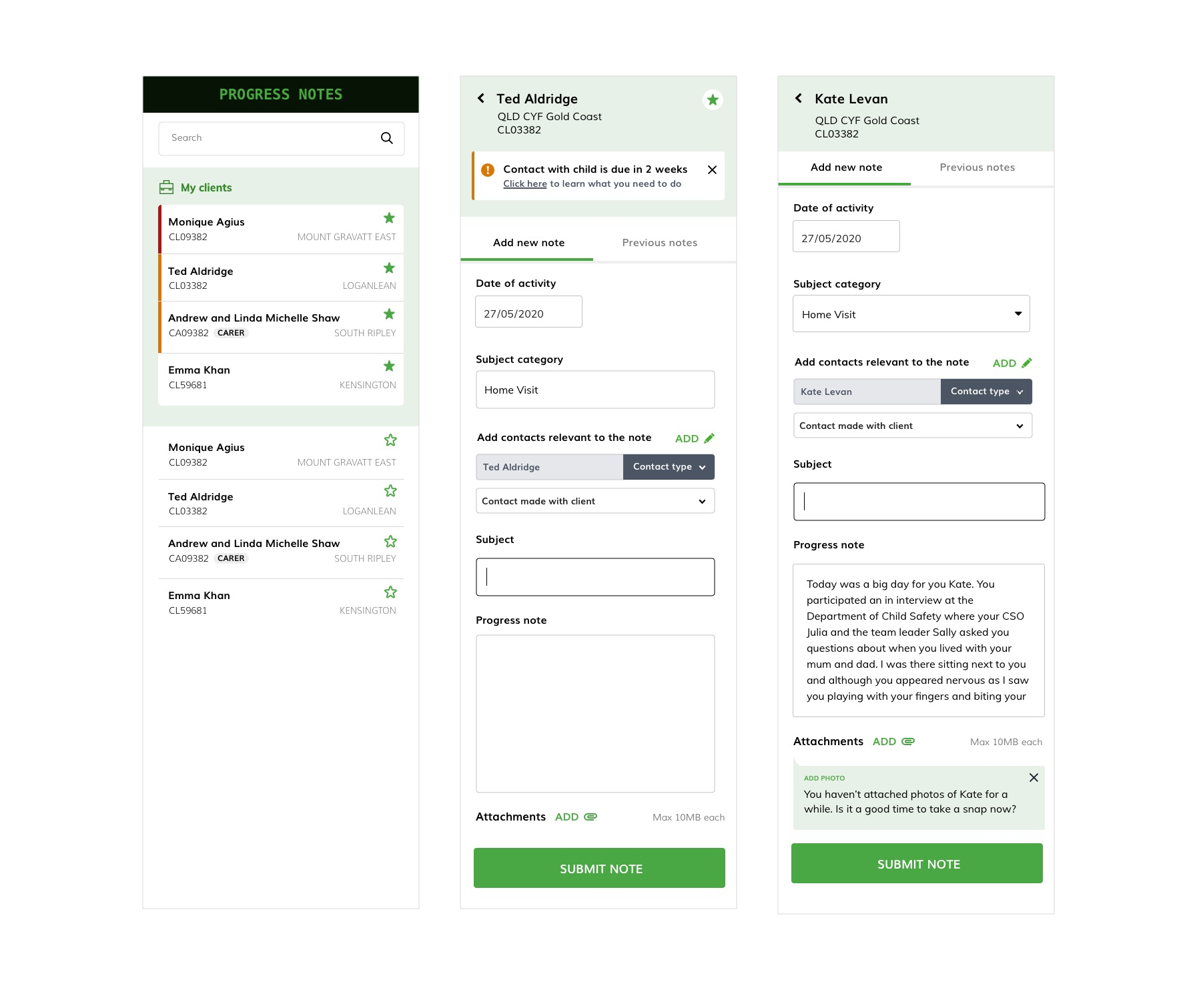
First goal of the app was to slowly replace and improve the experience of the existing desktop application that was used for record keeping across several sectors: disability support, foster care support, aged care and refugee and asylum seekers support.
With the focus on foster care support workers, our team has significantly improved the interaction with the original system by giving the carers the tool to use on the go, so that they don’t have to scribble meeting notes on a paper or waste their precious face-to-face time with a client on admin paperwork.
Scalable solution
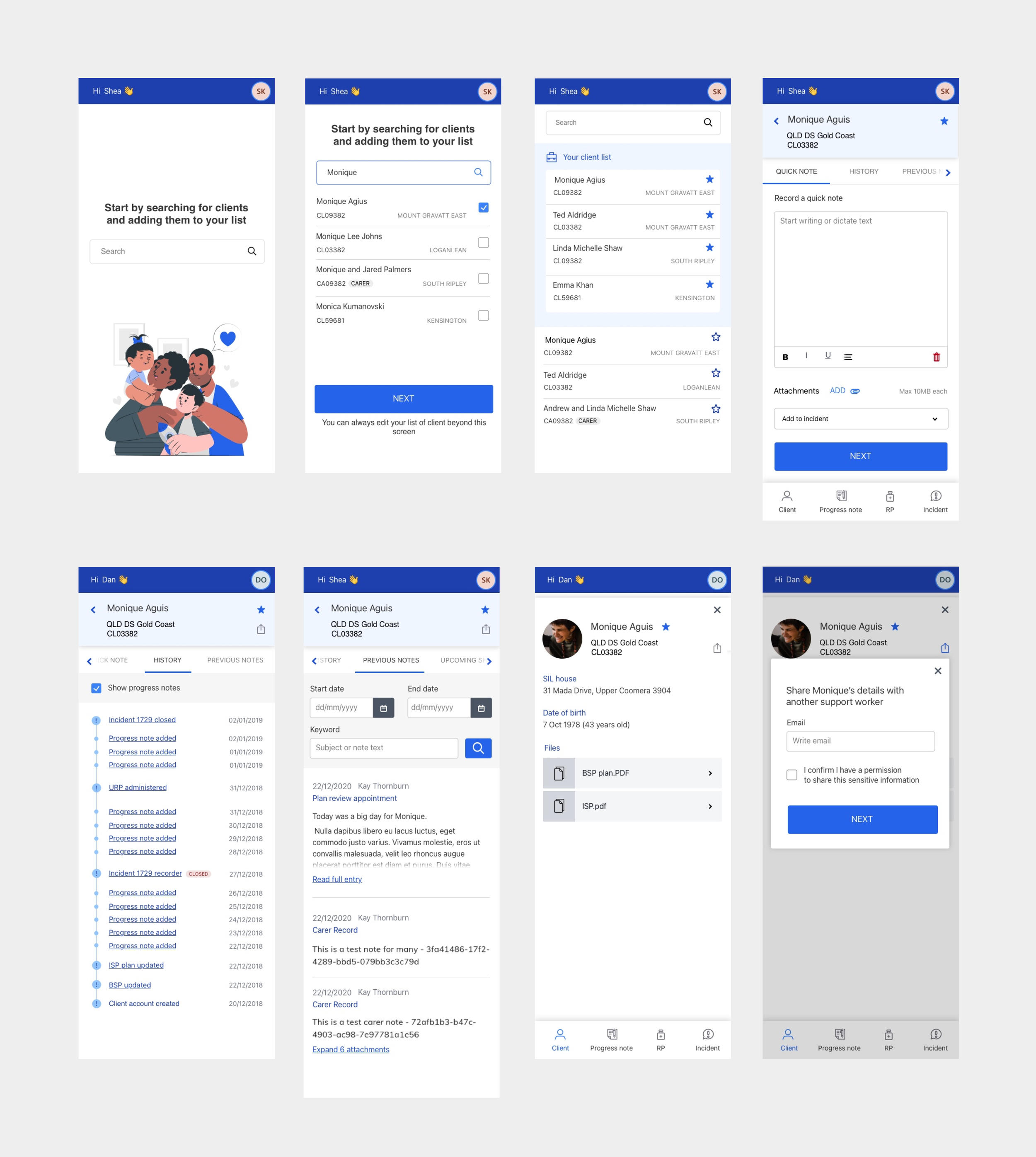
Once we nailed the core functionality of the application, the team moved on identifying a suitable UI framework so that we can move on with design iterations faster (and to save $ on development for non-for-profit organisation).
The new framework meant I had more opportunities to explore other functionalities that would further decrease frictions experienced in the old system.
It was also an opportunity for me to to get our app in line with WCAG 2.0 and make it colourblindness-friendly with a new inclusive blue colour palette.
Machine learning technology to improve carers’ note taking practice
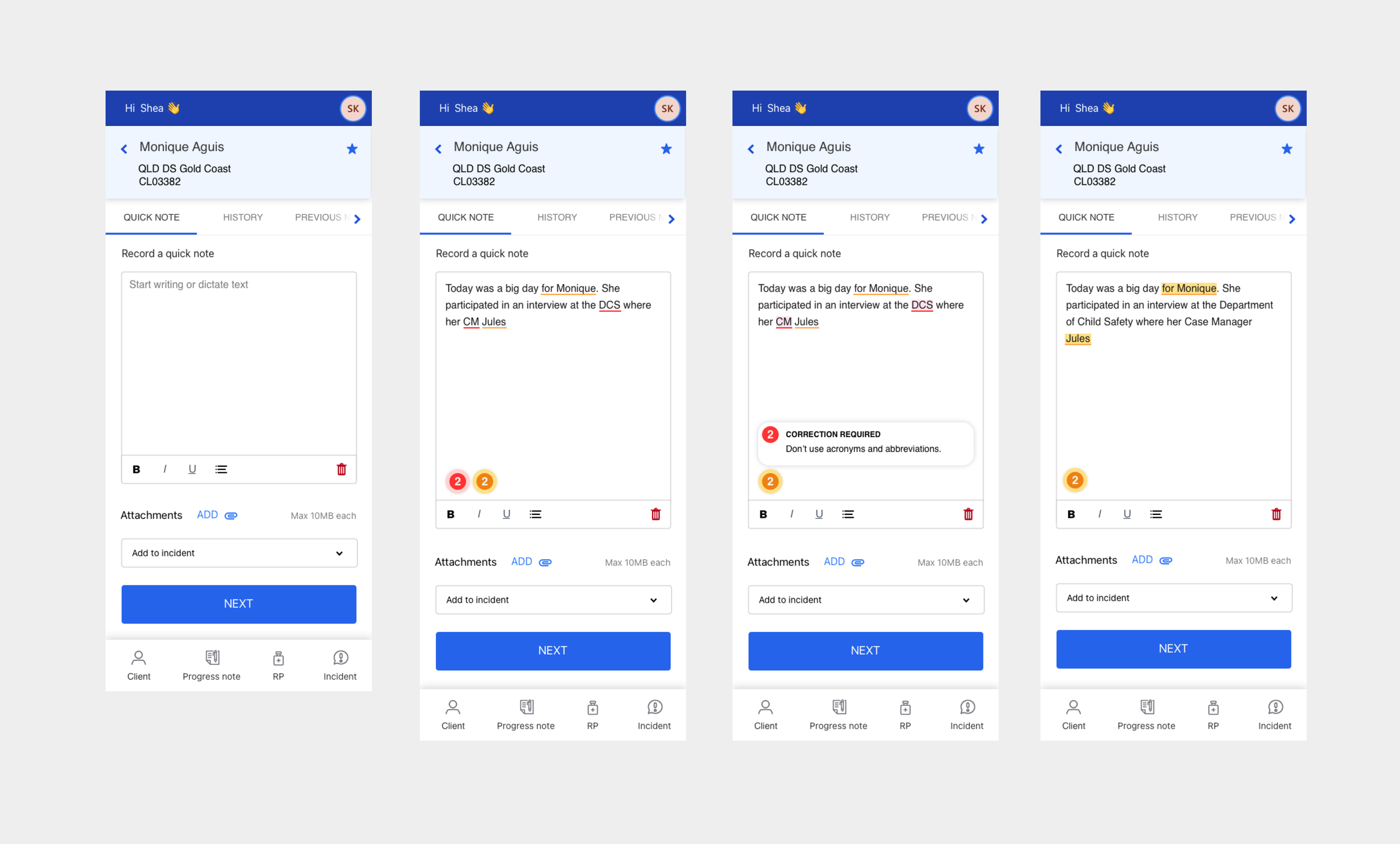
Just before I left the the team, we kicked off a discovery into improving the way how carers take notes. The quality and the language of the notes directly relate to potential life outcomes of the clients, so there are certain rules on how these notes should be recorded. For example: always speak in the second person, provide facts and not opinions, don’t use slang and idiomatic expressions, etc.
To help the carers to be more aligned with the rules when capturing the notes, we explored the use of Amazon Comprehend technology. First, we worked with a several practice leaders to tag existing 10,000 notes that are aligned with the rules, and then our developers fed it into the ML system to write algorithms for the app.
Unfortunately, I haven’t seen these improvements live as I left the organisation in August 2021. However, I worked on UI outputs that were used after I left.
The progress note app has made it so much easier to pop notes straight on a child’s file. It’s also so much easier to screen shot sms conversations so the information is recorded immediately and accurately.
This is probably the biggest time saver as it negates emailing yourself photos, saving them, labelling them and uploading individually. LWB will definitely be richer due to the app!
Progress Notes user